SELECTED EXHIBITIONS


Affective Archives
May 30 - August 28, 2026Curated by Amanda MorganWOPHA [Women Photographers International Archive] x Greenspace Gallery
Group exhibition including: Christine Cortes, Remijin Camping and Alicia Vera
The exhibition, Affective Archives, places three photographers with formally distinct yet conceptually analogous works in dialogue. In the featured series, each artist revisits their personal histories to reimagine the familial archive, creating works that are both poignant and relatable. These nontraditional archives do not purport to be impartial records, objective biographies, or linear chronologies, but rather, attempt to access and assemble the ethereal and intangible: emotions, relationships, spirits. Through different subjects —landscapes, inanimate objects, or domestic portraits— each photographer illustrates the intrinsic significance of the everyday, materializing and preserving the ephemeral connections that shape our lives.
In her series A Mother’s Love, RemiJin Camping catalogues a lifetime of accumulated objects gifted by her late mother. The images present a range of everyday artifacts: from perfume bottles and travel-size toiletries to sunglasses, handbags, tube tops, rings, and bracelets—many of which were worn just once by Camping’s mother before she gave them away, a practice she felt suffused the items with good luck. As documentation, the photographs not only take stock of an abundant collection of personal effects, but they offer a portrait of the artist’s mother—what she enjoyed and valued—along with her efforts to remain present in her daughter’s life, even when separated by time and distance.
Divinidades Atrevidas, presented by Christine Alice Cortes Cañon, looks at landscape to produce an archive of place that is layered with memory, time, and transgenerational connection. An ongoing series, the works are a form of self-portraiture that unites human presence and landscape, one incorporating the other. The start of the project coincided with the passing of the artist’s father, and is marked by a sense of vulnerability, melancholy, and
contemplation that is reflective of this mournful and searching period. Many of the photographs were taken during Cortes Cañon’s cathartic walks in Colombia and South Florida, where theartist was raised, and were often developed long after they were captured. This meditative process yields images that act as a confluence of disparate moments in time and unite various expressions of identity—an effect furthered by the images’ printing on transparent plexiglass.
Prompted by her mother’s Alzheimer’s diagnosis, Alicia Vera created the series Va a Llover Toda La Noche as a means of comprehending her family’s transformed future while reconsidering their shared past. The process began with sifting through old family photos, emails, text messages, prayer cards, drawings, and notes that the artist found in her mother’s house. Some of these items have since become part of the project, which weaves together photographs and mementos to create a moving account of familial legacies and a record of home. At the same time, these collaged images reflect the intricate constellation of family dynamics that shape one’s life and the impact these relationships have on one’s own sense of identity. With these works, the artists look to the past to facilitate introspection, build their own truths, and move forward with greater clarity.


I WISH WE HAD MORE TIME
April 8 - October 4, 2026
Curated by The Institute of Queer Ecology
Klima Biennial, Museum Hundertwasser, Vienna, Austria
All forms of life on Earth are marked by change. Nature appears to be a balance between growth and decay, life and death, rise and fall. While some things return in cycles, others vanish forever. Loss is one of the fundamental experiences of existence.
It marks the ruptures and transtormations whenever the enduring reveals itself to be merely transitory and certainties start to unravel. At the same time, loss opens up space for renewal.
I Wish We Had More Time examines loss in its multilayered dimensions: ecological, social, and personal. Changes in climatic conditions destabilize the environmental balance of multispecies communities and contront many organisms with enormous challenges as they try to adapt. The fragility of coexistence comes to light through social crises and collaborative efforts to deal with the related impact: archives preserve queer histories and maintain continuities. Chosen families develop new forms of care and connectedness. On the personal level, loss is acutely felt in love and wistful longing, in encounters with the right person at the wrong time, in missed opportunities, in fading passion
Thirty-four contributors—not only artists, but scientists, writers, musicians, performers—respond to these themes, capturing direct impressions through diverse media: drawings, prints, photographs, videos, audio pieces, objects, and texts.
Within the exhibition space, they engage in reciprocal dialogue, create resonances, and initiate unexpected connections. In their openness, urgency, and dynamic form, they present fleeting states and conditions before these change are lost. The individual stories condense into a sculpture, the Orrery of Interconnected Loss, that recontextualizes a mechanical model of the solar system. Each contributor occupies a position in this planetary ecosytem, moving perpetually between return and lose. The single stories thus weave together into a shared queer cosmology of loss, one that never comes to a conclusion but finds its paths in cycles.
The texts supplementing the works gathered in this publication are at once descriptions, commentaries, and amplifying narra-tives. Multilayered and multifaceted, they vary in style and tone.
The exhibition I Wish We Had More Time presents loss visually as a shared experience and thus opens up speculative scenarios: What could have been, what almost was, and what may be. Like a growing archive, the project continues to unfold and cumulatively absorbs stories, relationships, and traces.
Akin to a time capsule, these aspects are transported into future presents through the ongoing process of collecting and preserving
The Institute of Queer Ecology, co-directed by Lee Pivnik and Nicolas Baird, is a constantly developing collaborative organism aiming to put peripheral solutions to ecological crises at the centre of public awareness. Their interdisciplinary projects are embedded in the theoretical framework of queer ecology, an adaptive practice that explores interconnectivity, intimacy, and multispecies relationships. The collective questions destructive anthropocentric hierarchies and imagines a just, relational future, one in which human and more-than-human life forms coexist equally.
For the project I Wish We Had More Time, the organism expands into a network of thirty-four international contributions from the visual arts, science, literature, and performance.
Images courtesy the artist and The institute of Queer Ecology


Strange Natures
April 10 - July 31, 2025
Curated by Krys Ortega
Swenson Gallery, Bakehouse Art Complex, Miami, FL
Group exhibition including: Christine Cortes, Lee Pivnik, and Zoe Schweiger
Strange Natures features the work of three artists exploring themes of communal care, loss, resilience, and tenderness through the lens of South Florida’s ecology. While the artists use different mediums, they all engage in a process of world-building that feels both of and beyond our natural environment.
The exhibition imagines how our connection to land will change depending on our collective response, whether care or indifference, to the exploitation of our natural ecosystems. By contemplating this relationship within the context of South Florida’s landscape, the artists explore versions of reality that oscillate between dystopia and utopia, present and future, the familiar and strange.
Images courtesy the artist


sadsa
No Soy Eterno
March 29 - July 31, 2024
Curated by Jon Millan
Tactile Studios, Miami, FL
... where memory is tackled as it shifts and molds each time it is interpreted, imagery then becoming essential as a tool to find refuge, move forward, or simply revel in...
Images courtesy the artist
_
-
How We Remember
May 10 — September 12, 2023
Curated by Amy Galpin
As the medium of photography continues to evolve, so does the impulse to document milestones and the moments in-between. The selection of works on view here reflects a desire to archive memories. For some, memories are inconsistent and for others, memories endure.
The exhibition begins with photographer Joel Meyerowitz’s poignant portrayals of New York in the days after the Twin Towers collapsed on September 11, 2001. In the U.S., the events of that tragic day and the months that followed permeates personal and collective memories. As a resident of lower Manhattan, Meyerowitz sought to document the destruction that unfolded in his backyard.
Like Meyerowitz, other photographs in the exhibition reflect an instinctive and candid approach. Ruth Orkin documented New York, Paris, and Tel Aviv, among other places, with an intentional, organic immediacy. Roscoè B. Thické responds to the fleeting moments of everyday life with family and friends in Liberty City and other nearby neighborhoods. His works capture play and youthful energy. Christine Cortes’s intimate, emotional documentation of a return home to Colombia reveals quiet moments of work and rest. Their approach toggles between connectedness and distance.
From Orkin’s traditional gelatin silver prints to Cortes’ contemporary exploration of the medium printed on plexiglass, the exhibition explores multifaceted subjects and approaches to photography.
How We Remember explores the power of photography to capture the essence of human relationships both after exceptional events like 9/11 and as part of quotidian life.






Untitled - Group Exhibition
April 2020 - May 2020
Curated by Fred Snitzer
Fred Snitzer Gallery, Miami, FL
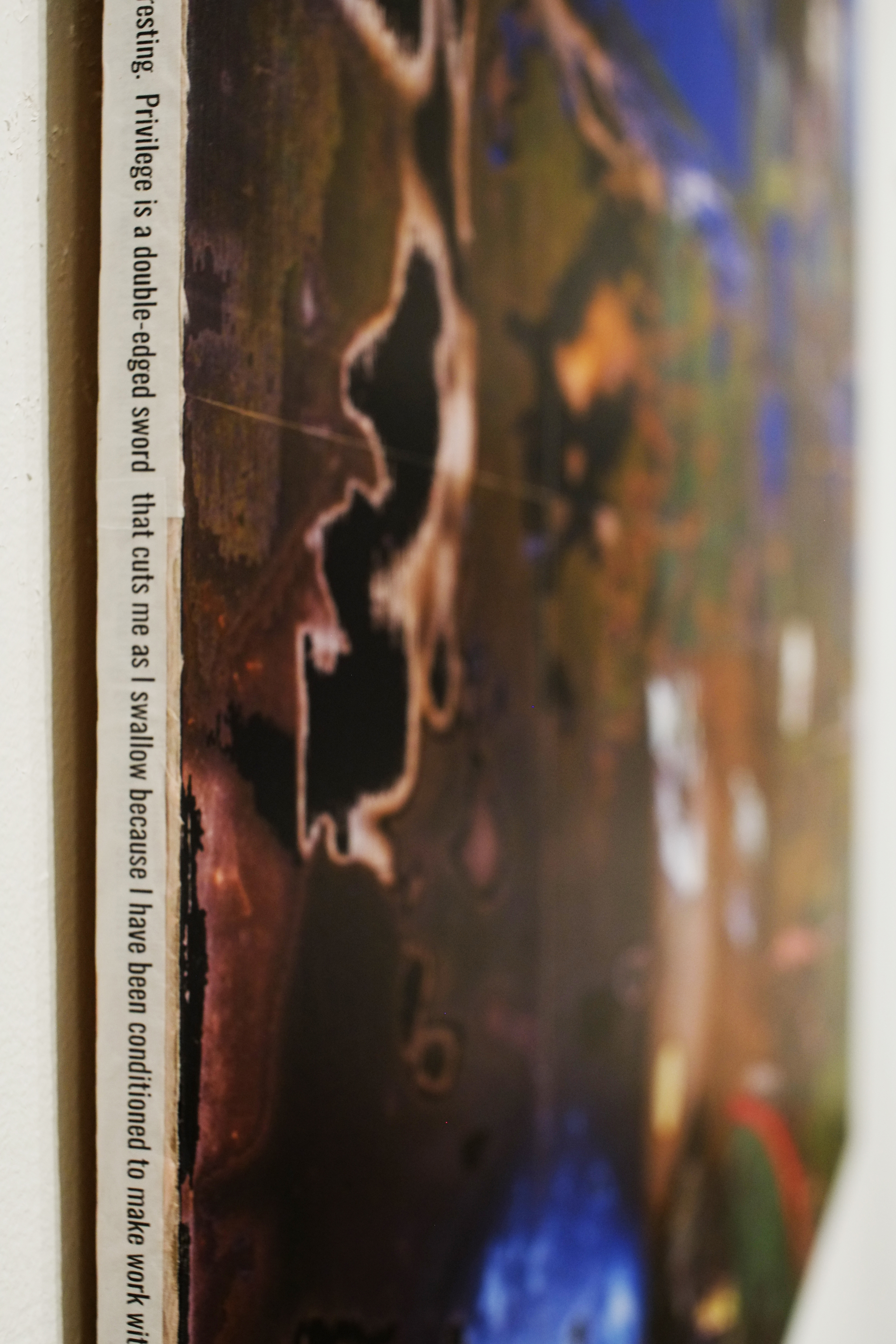
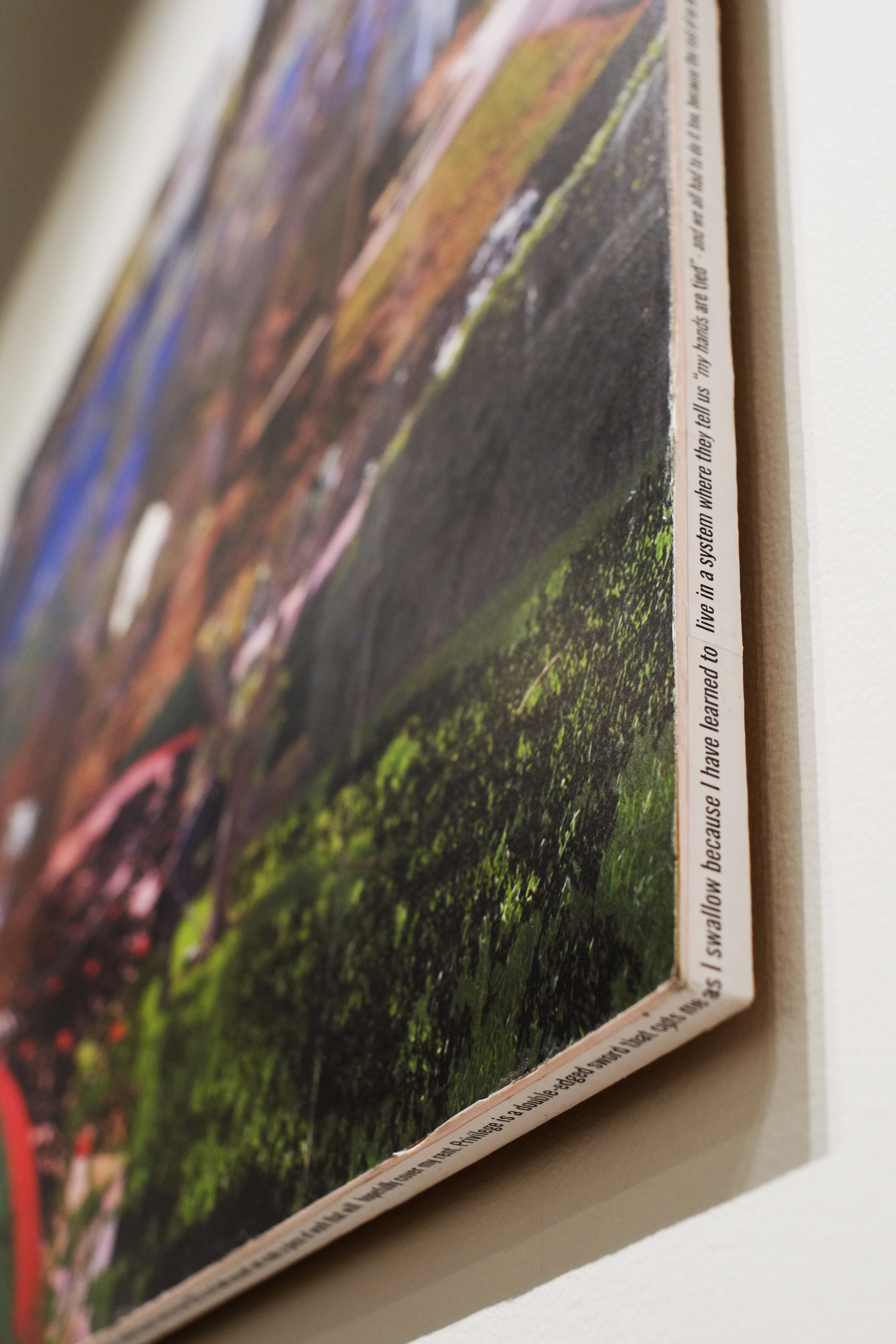
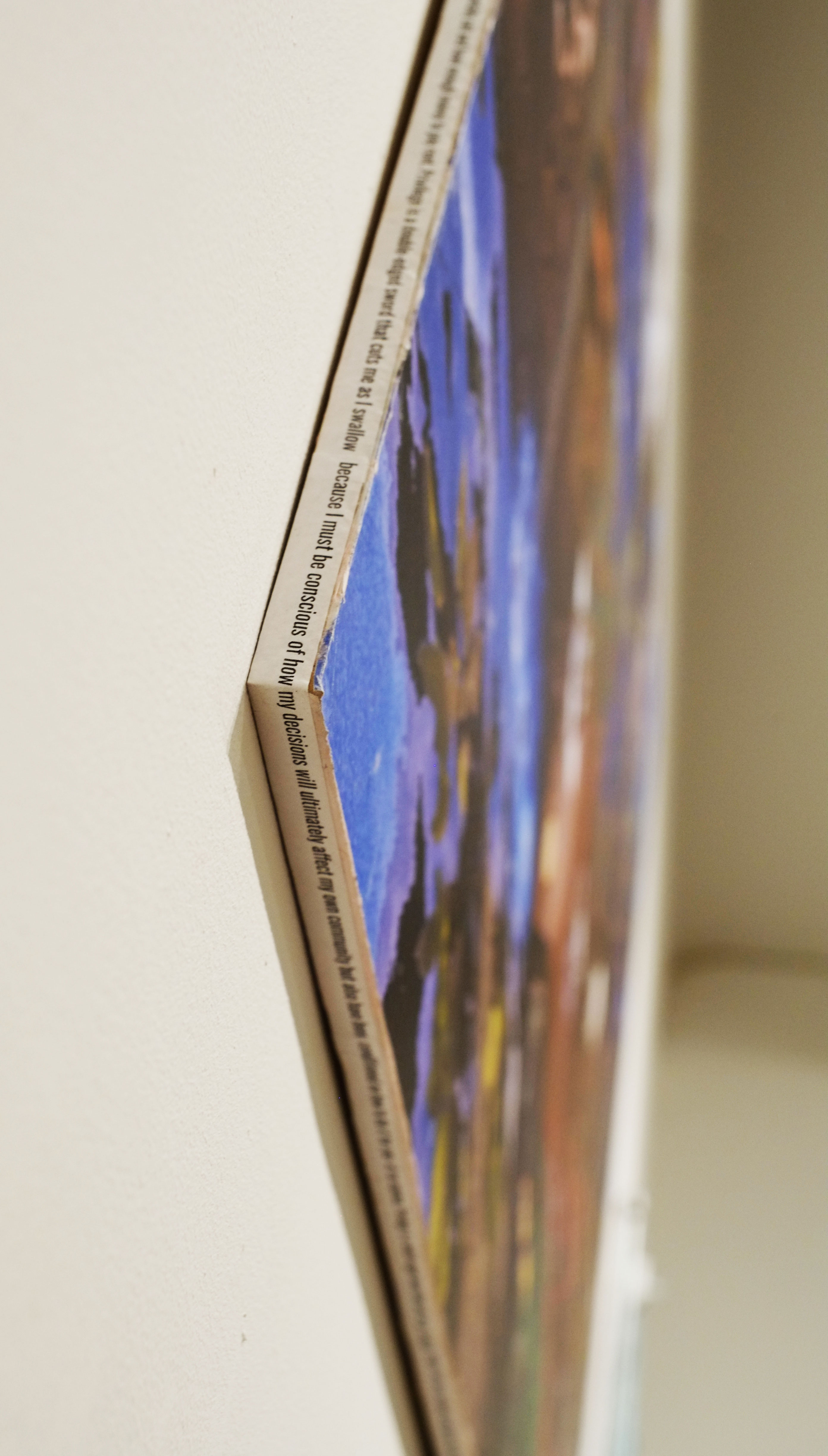
During the beginning of the pandemic year, the recent Bachelors in Fine Arts graduates of New World School of The Arts were invited to exhibit a new or recent work at Fred Snitzer Gallery.
Fred served as the Senior Class professor and jury evaluator of the 2020 cohort, and had grown familiar with each participating artist through extensive dialogue and studio visits that were supposed to culminate to the thesis exhibition of the prospective graduating cohort; but ultimately the class was not able to have their thesis works exhibited due to the pandemic cancellation.
The limitation between visibility and proximities through the restrictions in health contexts, the distance created between the cohort through this quarantine, and the tenacity of the cohort to continue individually building their artist practice provided an early opportunity for Fred Snitzer gallery to provide “appointment only” exhibition viewings, allowing art to be seen through an intimate lens.
Participating artists: Christine Cortes, Gabriela Fernandez, Amanda Linares, Aryal Novak, Christina Jatib, Vũ
Images courtesy the artist